JULIAN HOUSE
A House That Reclaims Life from Death
Julian’s Home, Bangalore
It was a tough call for Julian. He acquired this site at a lower cost due to its proximity to the graveyard—a reality that many would consider a limitation. But instead of turning away from the challenge, he chose to embrace it. The real leap of faith was selecting an architect who could transform this ordinary structure into a meaningful and luminous home.
What emerged is not just a house, but a quiet, radical demonstration of how architecture can turn the peculiar into the poetic. The design doesn’t hide from its context—it engages with it. It celebrates the street and even its nearness to the graveyard, as if reclaiming life from the shadow of death. This is a home that instills joy and beauty through thoughtful, inventive design.
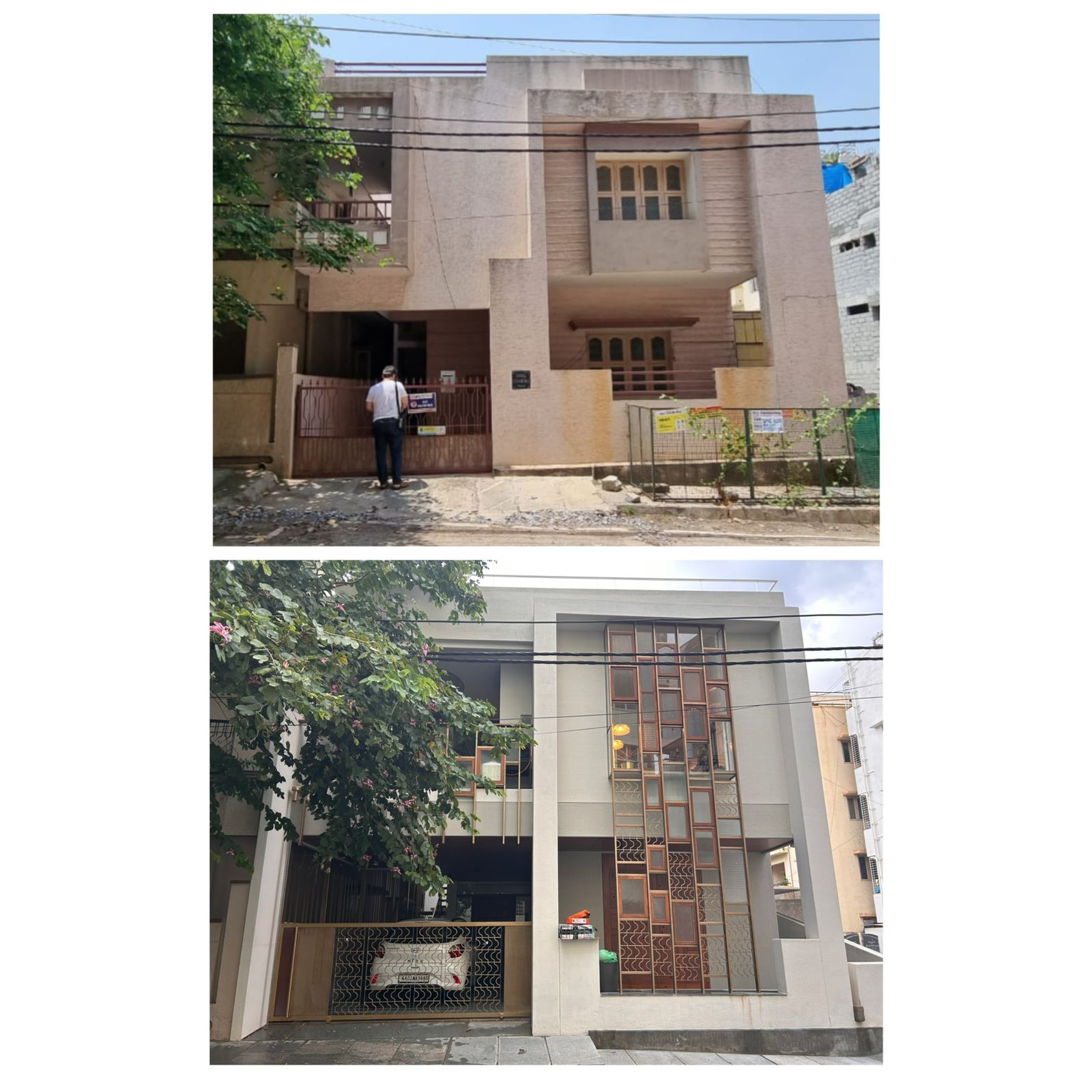
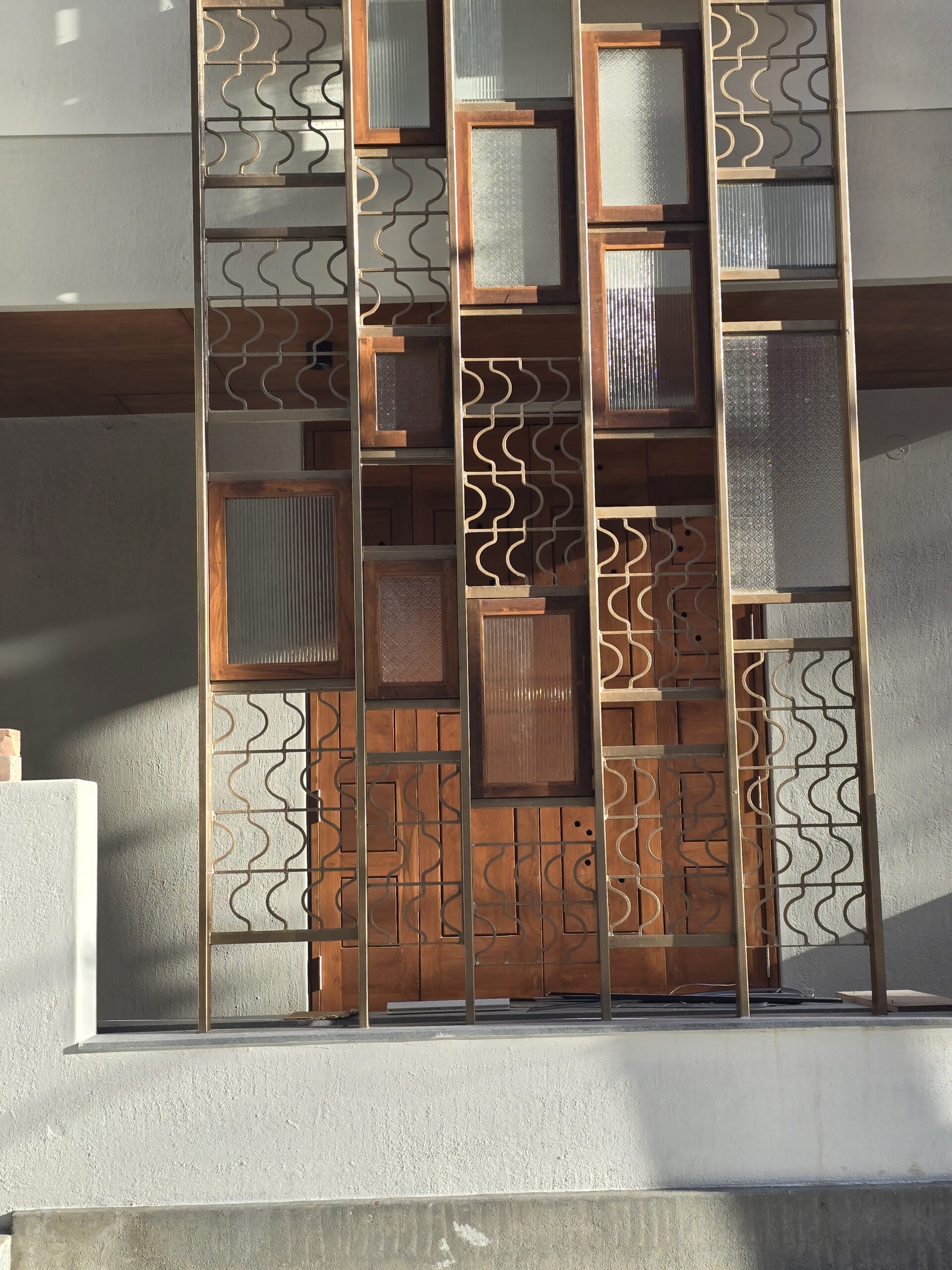
By night, the house becomes a glowing presence on the street. Veil-like façades, crafted from salvaged windows of the old house, wrap the home in a mosaic of light and memory. The effect is lantern-like—soft, glowing, and layered with history.
On the ground floor, internal walls were opened up to create a multi-functional space the client named Kalasangama—a confluence of creativity, study, play, work, and cultural gatherings. This zone serves as the social and creative heart of the house.
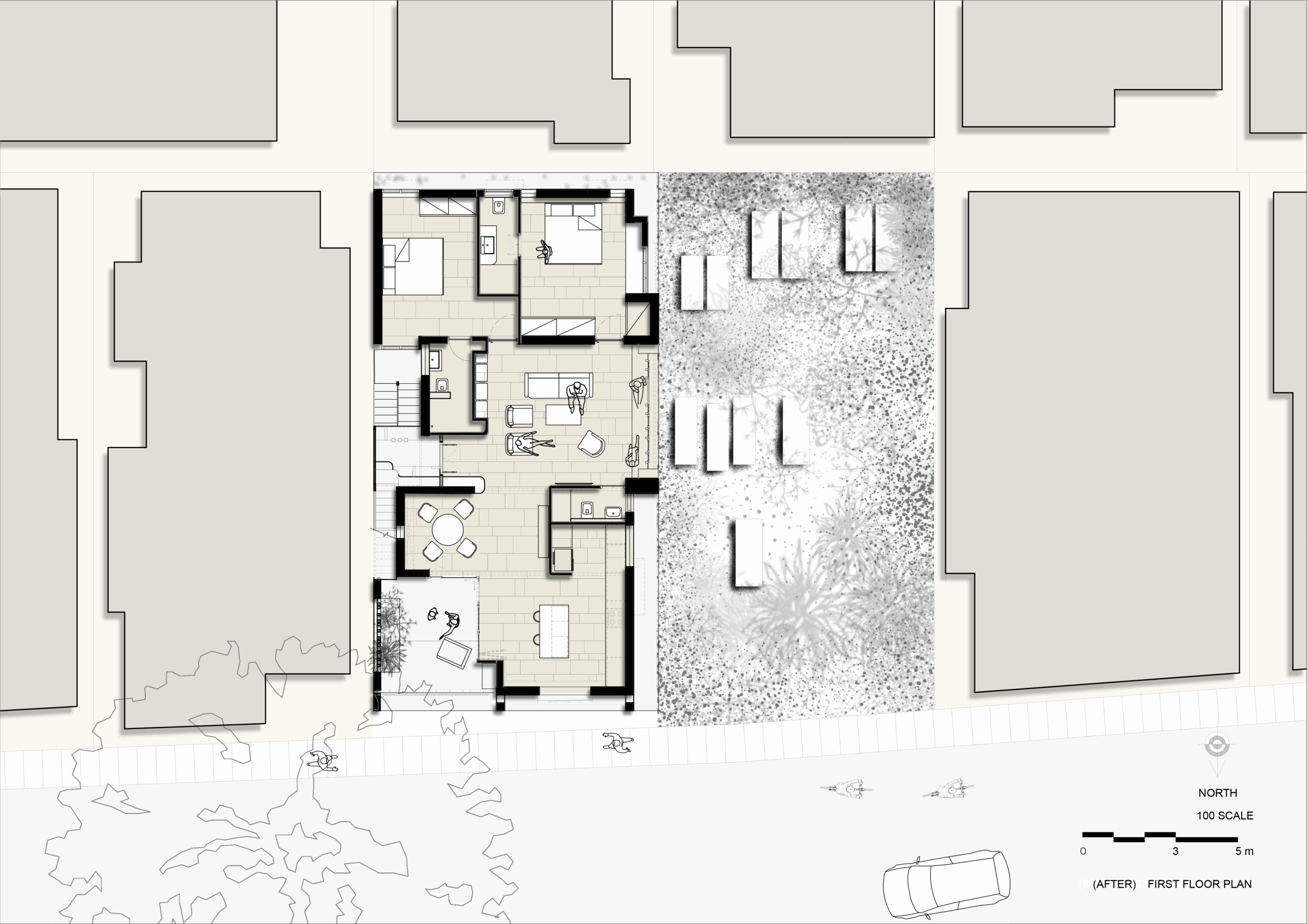
To enhance light and spatial clarity, the main staircase was relocated to the side setback. This frees the front edge of the house, opening it to the street and daylight. The reconfigured entry, now through the middle, becomes more dramatic—an unfolding rather than an arrival.
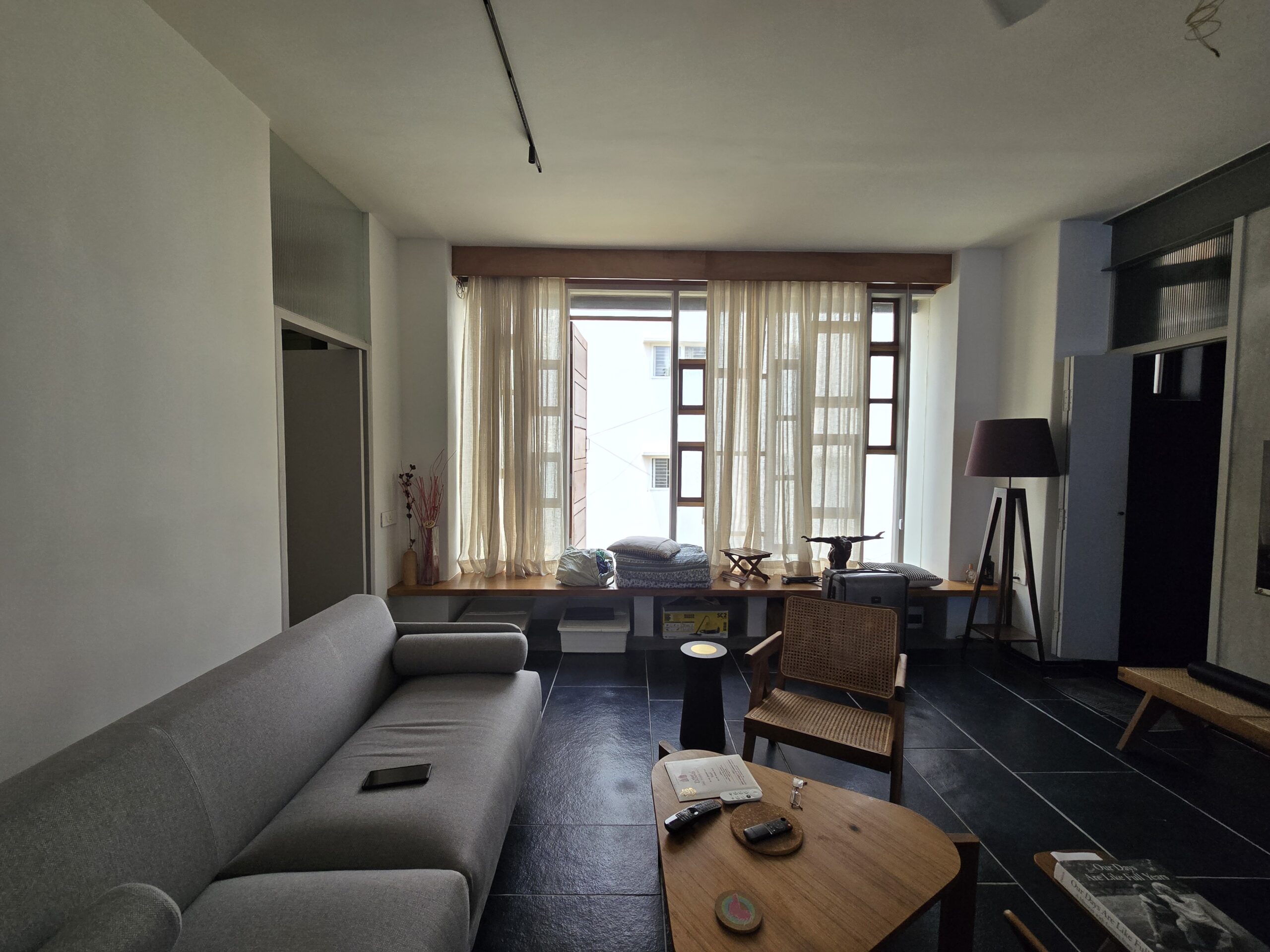
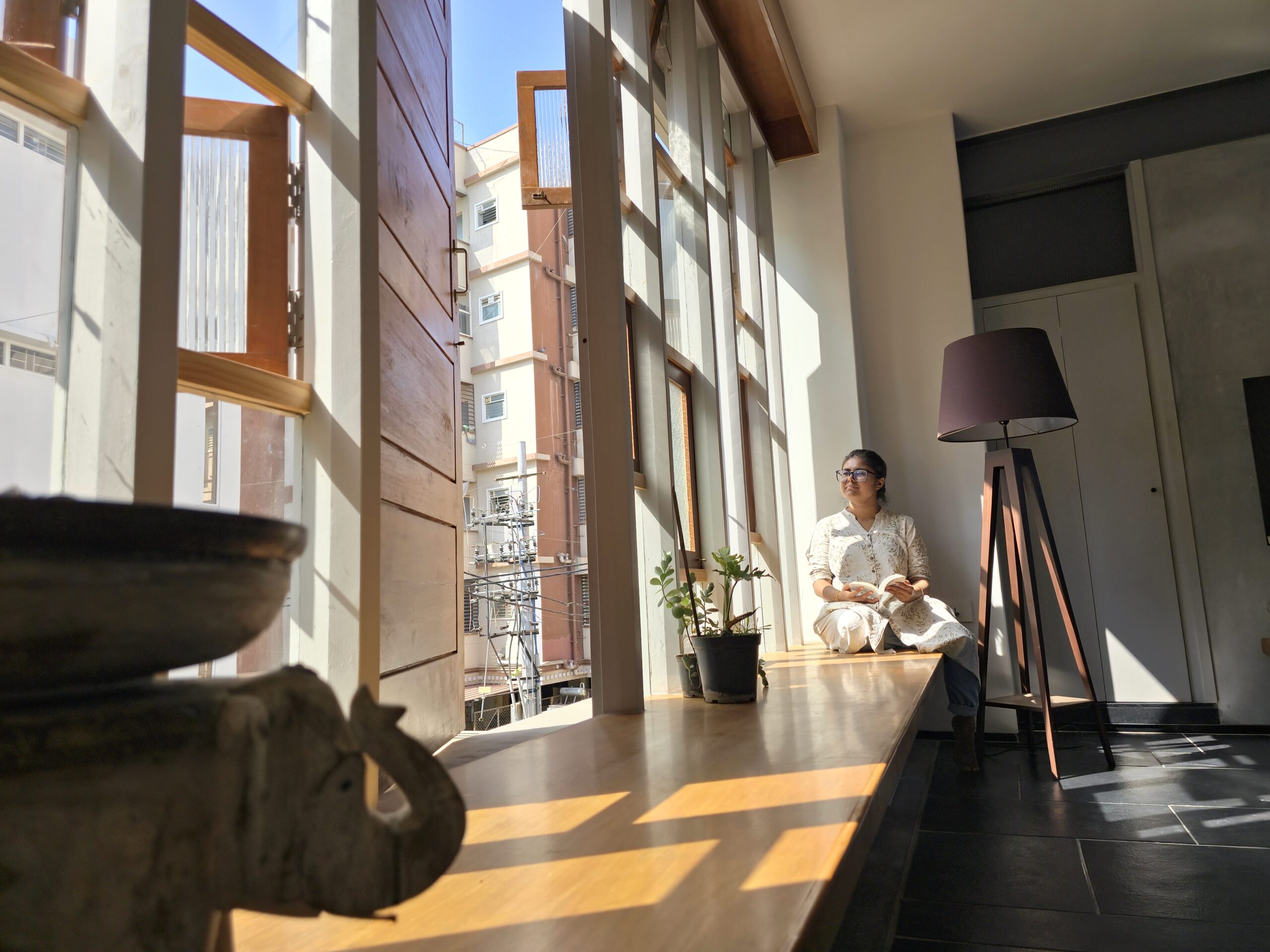
One of the most powerful gestures is in the living room: the entire western wall is removed to draw in light from the direction of the graveyard. This unexpected move results in a tapestry of shifting shadows and gentle reflections. An open doorway that faces the cemetery elicits mind-bending responses from visitors—ranging from surprise to laughter. It flips the narrative of fear into one of curiosity.
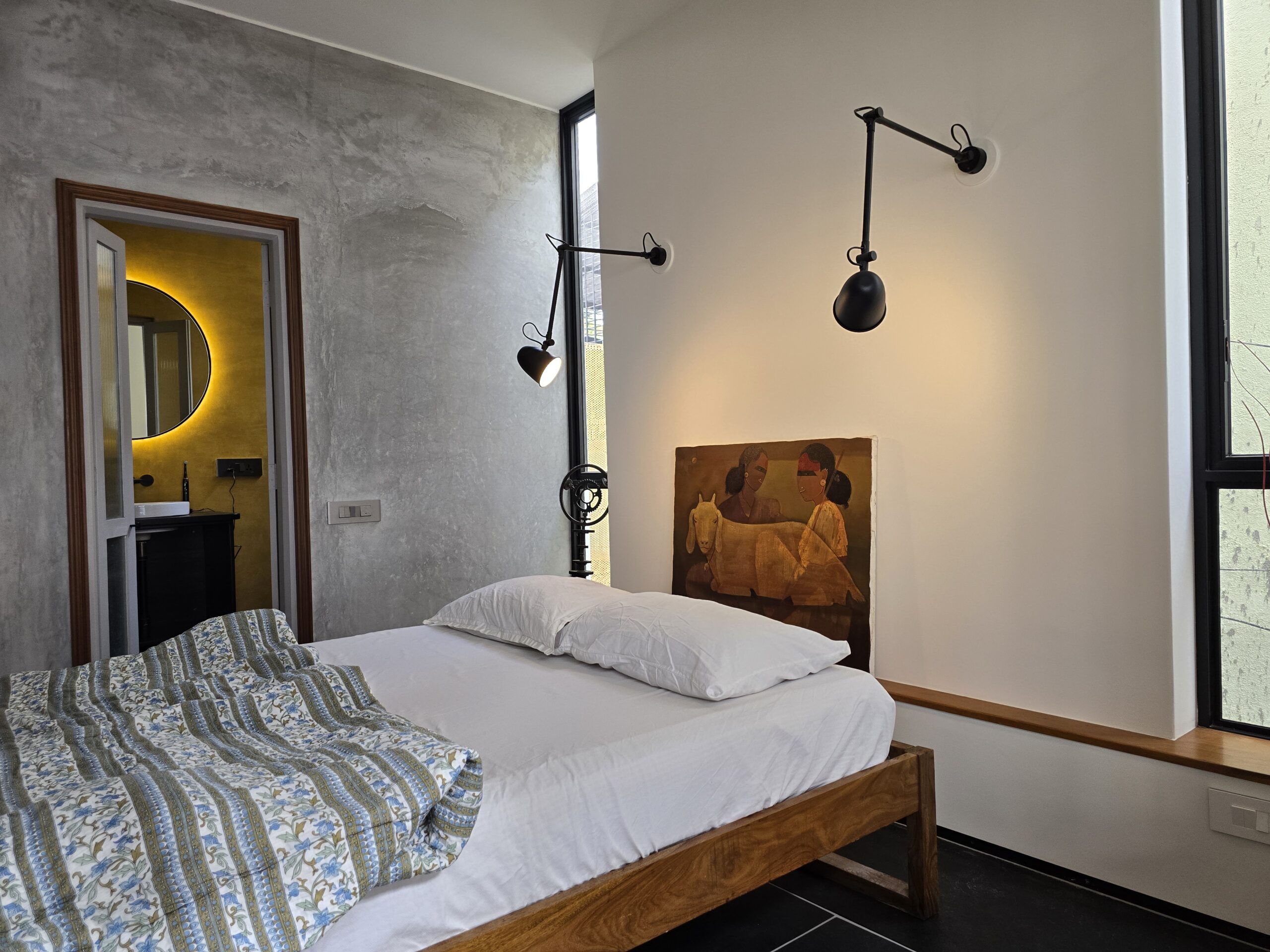
The interior palette is stark and grounded: black and white walls form a neutral canvas, allowing a curated interplay of old and new. A key material is native Cuddapah stone—an early and insistent request from the client—which anchors the entire aesthetic. Inspired in part by Corbusier’s Sarabhai House, the material expression is modern yet timeless, balanced with warm wood and muted greys.
Structural constraints led to an unexpected diagonal pull in the layout, directing movement across the house toward the front. This oblique flow creates a soft, organic quality—something that would not have emerged in a clean-slate modernist design. It connects the home’s interior life to its external context in a surprisingly fluid way.
The kitchen, for Julian, is the most sacred space. Alongside the dining and balcony, it forms a cocoon within the home—a zone of warmth, hosting, and nourishment. The kitchen island becomes the gravitational center, drawing people in like a contemporary hearth.
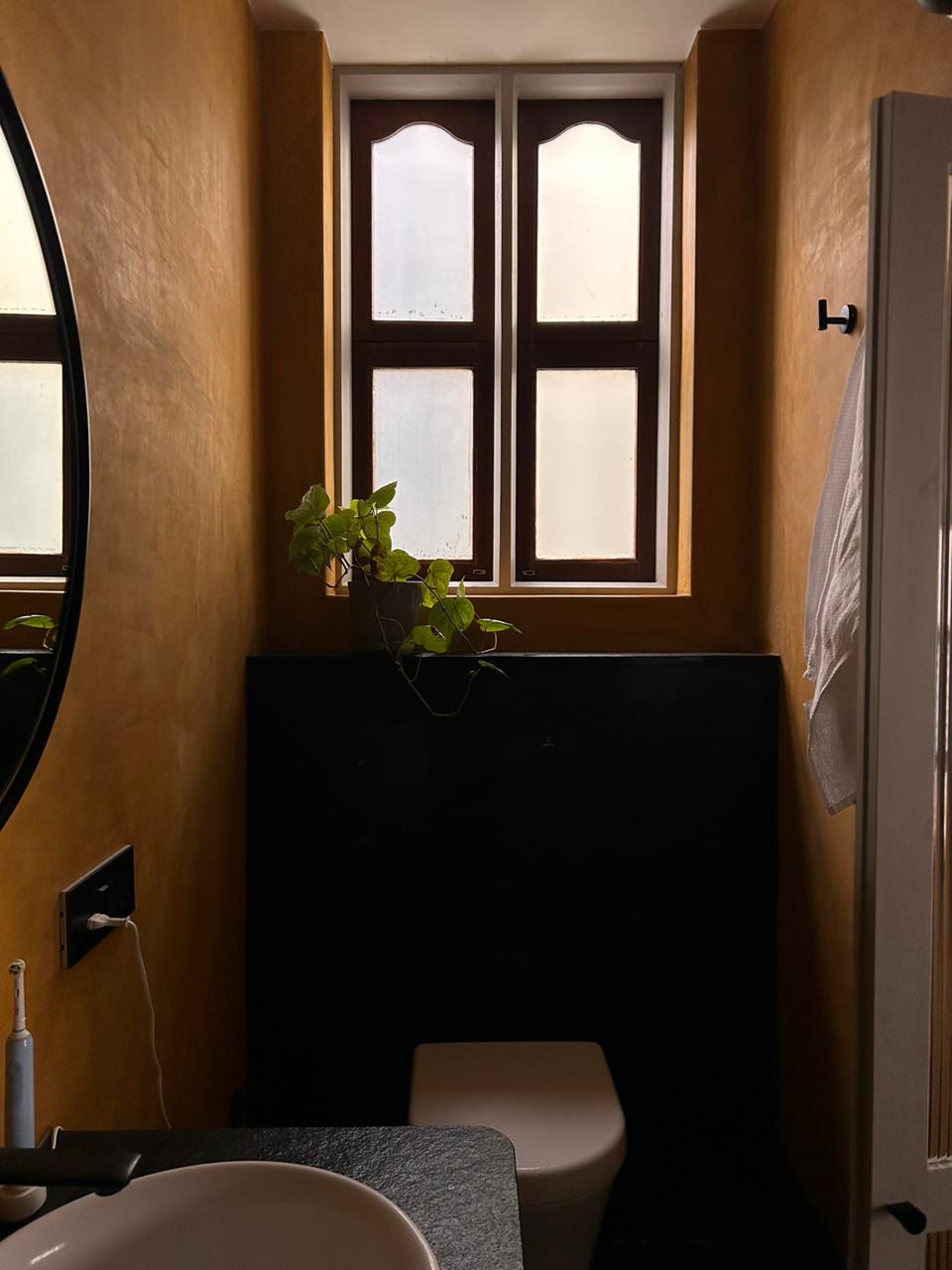
Many elements of the old house were salvaged and reborn. Windows were either preserved in their original places or repurposed into new screens and furniture. These reincarnated components become memory-holders, giving depth and story to the new architecture.
Some rooms carry vibrant gestures. The bathrooms, for instance, are bathed in a seamless, intense yellow lime-cement finish. Warm, earthy, and textural, these spaces feel sensorial and bold—turning the everyday into an encounter.
The home is also filled with moments of quiet whimsy. A starry-patterned staircase in the eastern setback gently leads to the terrace. In the northeast balcony, remnants of removed walls are left visible, celebrated through circular plaster cutouts and thoughtfully placed lights. These details become soft imprints of time—ghosts that have been gently welcomed rather than erased.
At its core, this house offers a transformative message—a quiet but profound shift in perspective. It reminds us that fear can become courage, and fatigue can turn into celebration. As the Sufi poet Kahlil Gibran wrote:
“Do not dwell in the tombs made by the dead for the living.”
This home reinterprets that wisdom. It doesn’t shy away from death—it lets it animate life. Julian’s house shows us that to embrace mortality is, in fact, to liberate vitality